
Science & Nature
MediumFossil Detectives Crossword
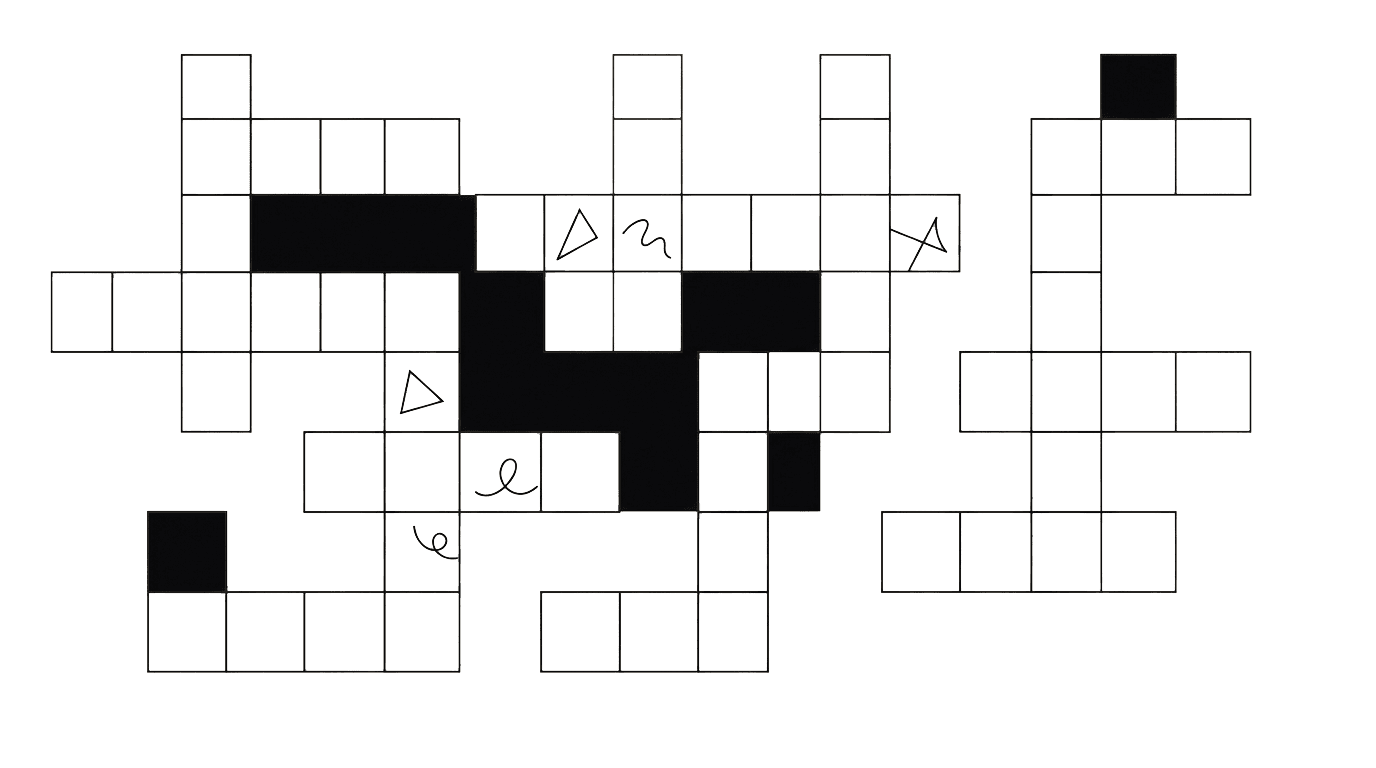
Category: Science & NatureDifficulty: Medium12 × 13
Friday, November 6
Enter one letter per square. Answers run Across or Down. Omit spaces and accents; any special spelling convention is stated in the clue. This is a freeform themed grid, so some letters are not crossed.

About This Theme
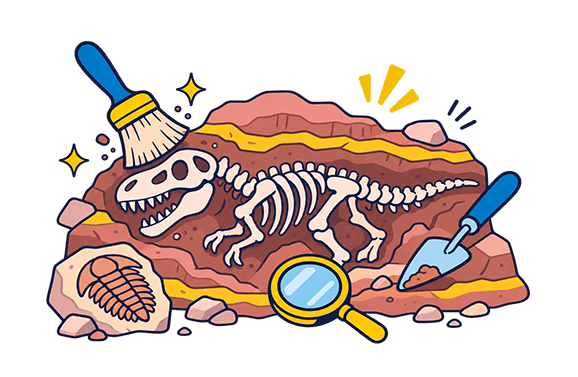
Fossils are evidence, and interpreting them means asking what kind of evidence has survived. A shell can preserve a body part, while a footprint records an action without preserving the animal that made it. This puzzle visits both kinds of clues to the past and the work of studying them. Imagine examining a specimen in its surrounding rock before assigning a name. Shape, material, and position all matter. Not every fossil is a dinosaur bone, and not every record of ancient life looks like the organism it helps us understand. Merriam-Webster — Fossil; Trace Fossils - Fossils and Paleontology (U.S. National Park Service)Lock — Trace
Clues
Across
- 1Particles that accumulate and may bury an organism's remains (8)
- 3Scientific study of ancient life through fossils (12)
- 5Extinct marine mollusk often recognized by a coiled, chambered shell (8)
- 8Fossilized dung (9)
- 10Fossil copy formed when a natural mold fills with material (4)
- 11Fossilized tree resin that may preserve small organisms (5)
Down
- 1Plural term for layers of rock (6)
- 2Extinct marine arthropod named for its three lengthwise lobes (9)
- 4Rock or other material surrounding a fossil specimen (6)
- 6Hollow impression left after an organism's remains disappear; US spelling (4)
- 7Preserved remain or trace of life from the geological past (6)
- 9Kind of fossil represented by a footprint or burrow (5)
Answers and Explanations
After Your Solve
The contrast between body fossils and trace fossils is especially useful. One can reveal anatomy; the other can reveal behavior. A footprint may show movement even when no skeleton is nearby, while a cast can preserve the shape of a shell whose original material has disappeared. Fossil interpretation combines those observations with the rock layers around them. The result is an argument from evidence, strengthened by context rather than by how dramatic a specimen looks in a display case. Merriam-Webster — Fossil; Trace Fossils - Fossils and Paleontology (U.S. National Park Service)Lock — Trace; Mold, Casts, and Steinkerns (U.S. National Park Service)Lock — Cast
- 1 acrossSEDIMENT
Sediment can cover remains before they are destroyed or scattered. Burial alone does not guarantee fossilization, but the surrounding material is an important part of the story. Body Fossils - Fossils and Paleontology (U.S. National Park Service)Lock — Sediment
- 3 acrossPALEONTOLOGY
Paleontology studies life from earlier geological periods through fossil evidence. Dinosaurs are one subject within it, not the boundary of a field that also investigates plants and other organisms. Merriam-Webster — Paleontology
- 5 acrossAMMONITE
Ammonites were cephalopods, relatives of living squid and octopuses. Their shells can resemble a snail's at first glance, but the animals belonged to different mollusk groups. Geology Glossary - Golden Gate National Recreation Area (U.S. National Park Service)Lock — Ammonite
- 8 acrossCOPROLITE
Coprolites can reveal information about ancient diets. They are trace fossils because they record an organism's activity rather than preserving its body directly. Trace Fossils - Fossils and Paleontology (U.S. National Park Service)Lock — Coprolite
- 10 acrossCAST
A cast reproduces the shape of the space it fills. The original shell or other body part may be gone even though its form remains recognizable. Mold, Casts, and Steinkerns (U.S. National Park Service)Lock — Cast
- 11 acrossAMBER
Amber is hardened ancient resin, not tree sap in the broad everyday sense. Inclusions can preserve details of small organisms that would rarely survive in ordinary sediment. Body Fossils - Fossils and Paleontology (U.S. National Park Service)Lock — Amber
- 1 downSTRATA
Strata preserve a sequence of deposition and later change. Their relationship provides context for fossils, rather than treating each specimen as an isolated object. Merriam-Webster — Stratum
- 2 downTRILOBITE
The three lobes run along a trilobite's body. They should not be confused with its head, thorax, and tail regions, which divide it in another direction. Merriam-Webster — Trilobite
- 4 downMATRIX
Matrix is the material that encloses a fossil. Removing it can expose detail, but documenting the specimen's original setting preserves information that preparation might otherwise lose. Merriam-Webster — Matrix
- 6 downMOLD
A mold preserves a negative impression of a shape. It differs from a cast, which forms when material fills that space and produces a positive copy. Mold, Casts, and Steinkerns (U.S. National Park Service)Lock — Mold
- 7 downFOSSIL
A fossil can be a body part or evidence of an organism's activity. The term therefore includes more than preserved bones and need not describe an entire animal. Merriam-Webster — Fossil
- 9 downTRACE
A trace fossil records activity rather than the organism's body. Its value lies in evidence of behavior, such as movement, feeding, or sheltering. Trace Fossils - Fossils and Paleontology (U.S. National Park Service)Lock — Trace
Further Reading
About Eric Allred
Puzzle writing, factual review and editorial direction
Eric Allred started Triviosity after seeing how much his dad and his dad's partner enjoyed morning trivia on their iPad. A board-game fan since childhood, he brings several years of experience building a performance marketing agency to the solver experience. Eric is responsible for puzzle writing, factual review and editorial decisions, and reviews puzzles with AI assistance after they are created.
More about Eric AllredSuggest a correctionMore Puzzles
Science & Nature
HardSpace Crossword: Early Spaceflight
Play Space Crossword: Early Spaceflight
Keep a little curiosity in your inbox
Join the Triviosity newsletter for puzzle links and new themes. You can unsubscribe at any time.