
Games & Sport
HardOn the Fencing Strip Crossword
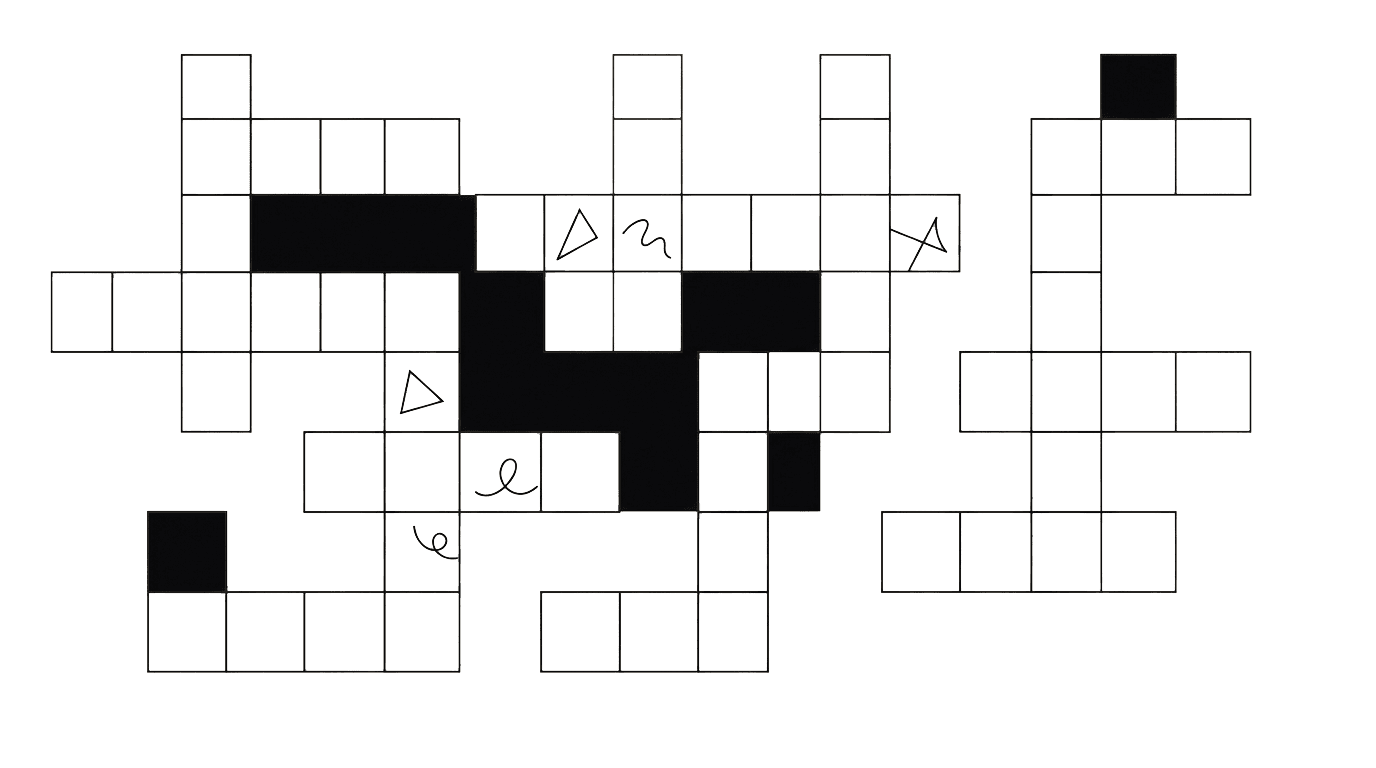
Category: Games & SportDifficulty: Medium9 × 12
Friday, October 30
Enter one letter per square. Answers run Across or Down. Omit spaces and accents; any special spelling convention is stated in the clue. This is a freeform themed grid, so some letters are not crossed.

About This Theme
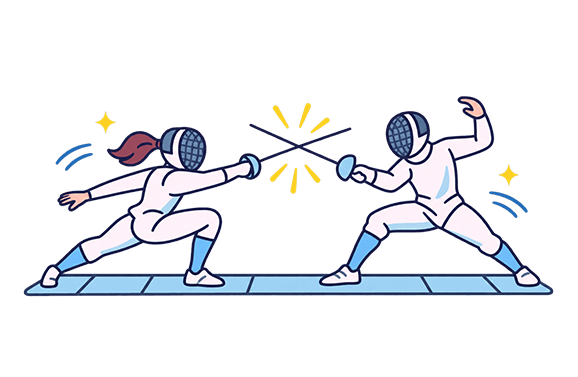
Fencing combines quick movement with a vocabulary that helps describe what happened in a fraction of a second. An exchange can include an invitation, a misleading action, a defense, and an immediate reply. This puzzle introduces those ideas alongside the three weapons and the space in which a bout takes place. Several English fencing terms come from French, so the clues state when an accent or space is omitted. Focus on the role of an action in the exchange: a defensive movement and the attack that follows it have different names. Fencing 101: Basics of Competition | USA Fencing — Foil; Fencing 101: Glossary of Fencing Terms | USA Fencing — Parry
Clues
Across
- 1Point-scoring fencing weapon with the torso as its principal target (4)
- 5Ready-position instruction before fencing begins, written as one word (7)
- 6Backward movement that increases distance from an opponent (7)
- 7Offensive response immediately following a successful parry (7)
- 10A fencing contest between two opponents (4)
- 11Point-scoring weapon with the whole body as target, without accents (4)
Down
- 1False attack intended to provoke a defensive reaction (5)
- 2Forward attacking movement driven from the rear leg (5)
- 3Defensive blade action that deflects an attack (5)
- 4Forward step toward the opponent (7)
- 8French-derived term for the fencing strip (5)
- 9Fencing weapon that can score with an edge as well as the point; British spelling (5)
Answers and Explanations
After Your Solve
The three weapons share equipment and movement vocabulary, but they do not share every scoring rule. Foil and sabre use priority conventions to resolve some exchanges; épée does not. A parry is the defensive blade action, and a riposte is the response that may follow it. Separating the two makes a fast exchange easier to describe. Fencing language is therefore more than a list of sword names: it is a compact way to explain a sequence of decisions. Fencing 101: Basics of Competition | USA Fencing — Foil; Fencing 101: Glossary of Fencing Terms | USA Fencing — Parry
- 1 acrossFOIL
Foil scores with the point and uses a restricted target area. It also uses right-of-way conventions, which distinguish its scoring from épée even when both fencers hit. Fencing 101: Basics of Competition | USA Fencing — Foil
- 5 acrossENGARDE
En garde tells fencers to take their ready position. The grid removes the space, while the phrase retains its usual two-word form in ordinary writing. Fencing 101: Glossary of Fencing Terms | USA Fencing — Engarde
- 6 acrossRETREAT
A retreat changes distance and can make an incoming attack fall short. Defense in fencing therefore depends on footwork as well as contact between blades. Footwork in Fencing: Gaining and Closing Distance — Linear retreat
- 7 acrossRIPOSTE
A riposte follows a defensive blade action. The order matters: an attack made without first parrying is not described by this term merely because it happens quickly. Fencing 101: Glossary of Fencing Terms | USA Fencing — Riposte
- 10 acrossBOUT
A bout is the individual contest, not the entire tournament. Competition formats may use different target scores, so the clue avoids implying one universal length. Try Fencing | USA Fencing — How a bout works
- 11 acrossEPEE
Épée permits touches on the whole body and does not use right-of-way. That combination makes hand and foot targets relevant in ways they are not in foil. Fencing 101: Basics of Competition | USA Fencing — Epee
- 1 downFEINT
A feint encourages an opponent to respond to a threat that will change. It is a tactical deception within an exchange rather than a completed scoring hit. Fencing 101: Glossary of Fencing Terms | USA Fencing — Feint
- 2 downLUNGE
A lunge extends the fencer toward an opponent while the front foot advances. It differs from simply walking forward because it is a coordinated attacking action. Fencing 101: Glossary of Fencing Terms | USA Fencing — Lunge
- 3 downPARRY
A parry addresses the opponent's blade. Moving the body out of reach can also defend against an attack, but that movement alone is not a parry. Fencing 101: Glossary of Fencing Terms | USA Fencing — Parry
- 4 downADVANCE
An advance reduces the distance between fencers. It is a footwork action that can prepare an attack without being the same movement as the lunge itself. Fencing 101: Glossary of Fencing Terms | USA Fencing — Advance
- 8 downPISTE
The piste is the defined area on which a bout is fenced. Its boundaries matter because stepping beyond them can affect how an exchange is handled. Fencing 101: Glossary of Fencing Terms | USA Fencing — Piste
- 9 downSABRE
Sabre allows cutting actions as well as thrusts. American writing often uses saber, so the clue specifies the spelling needed by this grid. Fencing 101: Basics of Competition | USA Fencing — Sabre
Further Reading
About Eric Allred
Puzzle writing, factual review and editorial direction
Eric Allred started Triviosity after seeing how much his dad and his dad's partner enjoyed morning trivia on their iPad. A board-game fan since childhood, he brings several years of experience building a performance marketing agency to the solver experience. Eric is responsible for puzzle writing, factual review and editorial decisions, and reviews puzzles with AI assistance after they are created.
More about Eric AllredSuggest a correctionMore Puzzles
Games & Sport
EasySoccer Crossword: Football Vocabulary
Play Soccer Crossword: Football Vocabulary
Keep a little curiosity in your inbox
Join the Triviosity newsletter for puzzle links and new themes. You can unsubscribe at any time.