
Arts & History
HardThe Pottery Studio Crossword
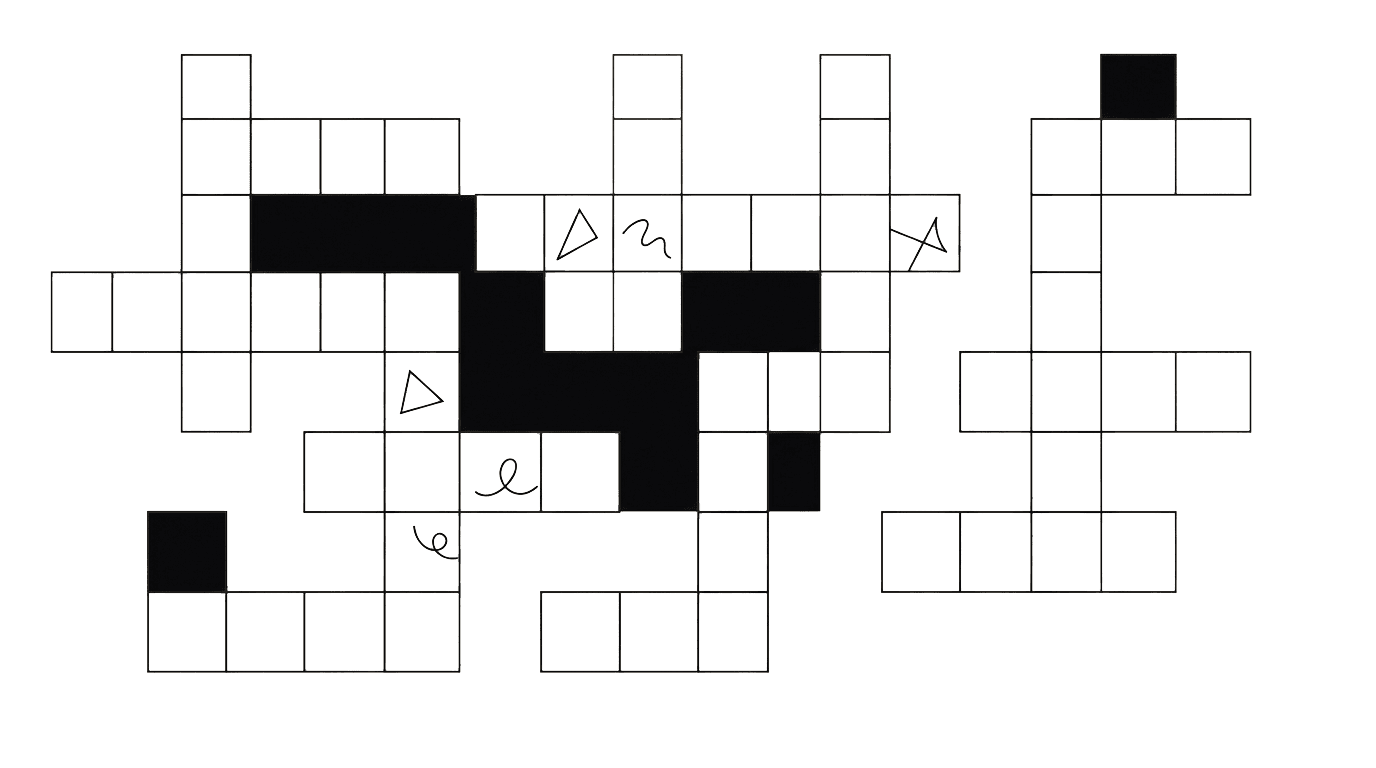
Category: Arts & HistoryDifficulty: Medium11 × 11
Tuesday, October 27
Enter one letter per square. Answers run Across or Down. Omit spaces and accents; any special spelling convention is stated in the clue. This is a freeform themed grid, so some letters are not crossed.

About This Theme
Pottery begins with a material that can be reshaped and ends with an object changed by heat. Between those stages, a maker decides how to build, dry, decorate, and fire the work. This puzzle focuses on that sequence and the tools and materials involved. Imagine following a vessel through the studio rather than trying to identify a particular historical style. Some terms name a process, others a clay body or surface treatment. Keeping those categories separate will help you choose between answers that may initially sound interchangeable. An A–Z of Ceramics · V&A — Glaze; Richard Batterham: methods of making · V&A — Throwing

Clues
Across
- 4Rotating platform used to throw a pot (5)
- 6Crushed fired ceramic added to a clay body (4)
- 7Rope-shaped roll of clay used in hand-building (4)
- 9Liquid mixture of clay and water (4)
- 10Decoration made by scratching through a surface layer (9)
- 11Pottery after its first firing, before glazing, in common studio usage (6)
Down
- 1Pottery term for shaping clay on a wheel (8)
- 2Coating that forms a glassy surface when fired (5)
- 3Fine ceramic body associated with translucence when thin (9)
- 5High-temperature chamber used to fire pottery (4)
- 8Moldable earth material at the start of a potter's work (4)
- 10Flat sheet of clay used to build a pot or box (4)
Answers and Explanations
After Your Solve
Drying and firing are different transformations. A dry, unfired piece can still be vulnerable to water, while firing creates ceramic material through changes caused by heat. Surface treatments also deserve careful distinctions: a liquid clay coating is not automatically a glaze, and a decorative line might be cut into a surface rather than painted onto it. Reading a pot as a record of these decisions can make an ordinary cup as interesting as a museum display piece. An A–Z of Ceramics · V&A — Glaze; Richard Batterham: methods of making · V&A — Throwing; Glossary of Pottery Terms — Bisque
- 4 acrossWHEEL
A potter's wheel rotates the clay while the maker shapes it. The rotation supports even circular walls, but controlling their thickness still requires careful hand pressure. Richard Batterham: methods of making · V&A — Wheel
- 6 acrossGROG
Grog introduces already-fired particles into clay. These particles can affect texture and handling, so it is an ingredient in the body rather than a surface decoration. Glossary of Pottery Terms — Grog
- 7 acrossCOIL
Coils can be stacked and joined to build a vessel's walls. The joins may remain visible as decoration or be smoothed away to create a continuous surface. Glossary of Pottery Terms — Coil
- 9 acrossSLIP
Slip can join pieces, decorate surfaces, or be poured into molds. Unlike glaze, it is fundamentally a suspension of clay rather than a glass-forming surface recipe. An A–Z of Ceramics · V&A — Slip
- 10 acrossSGRAFFITO
Sgraffito exposes a contrasting layer beneath the surface. On pottery, cutting through colored slip can produce lines with a different character from painted brushstrokes. An A–Z of Ceramics · V&A — Sgraffito
- 11 acrossBISQUE
Bisque ware has been fired but is commonly still porous enough to accept glaze. The word also appears in food vocabulary, where it means a very different thing. Glossary of Pottery Terms — Bisque
- 1 downTHROWING
Throwing means forming clay while it rotates on the wheel. The studio meaning is more specific than the everyday action of tossing an object through the air. Richard Batterham: methods of making · V&A — Throwing
- 2 downGLAZE
Glaze can add color, texture, and a protective surface. Its result depends on its composition and firing conditions, so the wet coating does not reveal its final appearance. An A–Z of Ceramics · V&A — Glaze
- 3 downPORCELAIN
Porcelain can transmit light through sufficiently thin walls. Its appearance also depends on formulation and firing, so whiteness alone is not a reliable identification test. An A–Z of Ceramics · V&A — Porcelain
- 5 downKILN
A kiln provides the heat that changes clay into ceramic. It is not simply a drying cupboard; firing produces material changes beyond the evaporation of water. Glossary of Pottery Terms — Kiln
- 8 downCLAY
Clay becomes workable when mixed with suitable moisture. Its ability to hold a new shape makes it useful for forming objects before drying and firing. Glossary of Pottery Terms — Clay
- 10 downSLAB
Slab work uses flat clay pieces that can be cut with templates and joined. The cited pitcher demonstration shows how a sheet becomes a vessel by bringing its edges together. ceramicartsnetwork.org — Using templates to construct a pitcher (PDF page 2)
Further Reading
- An A–Z of Ceramics · V&A — Glazevam.ac.uk
- Richard Batterham: methods of making · V&A — Throwingvam.ac.uk
- Glossary of Pottery Terms — Bisqueceramicartsnetwork.org
About Eric Allred
Puzzle writing, factual review and editorial direction
Eric Allred started Triviosity after seeing how much his dad and his dad's partner enjoyed morning trivia on their iPad. A board-game fan since childhood, he brings several years of experience building a performance marketing agency to the solver experience. Eric is responsible for puzzle writing, factual review and editorial decisions, and reviews puzzles with AI assistance after they are created.
More about Eric AllredSuggest a correctionMore Puzzles
Arts & History
EasyAncient Rome Crossword Puzzle
Play Ancient Rome Crossword Puzzle
Keep a little curiosity in your inbox
Join the Triviosity newsletter for puzzle links and new themes. You can unsubscribe at any time.