
Places & Travel
MediumBeneath the Surface Crossword
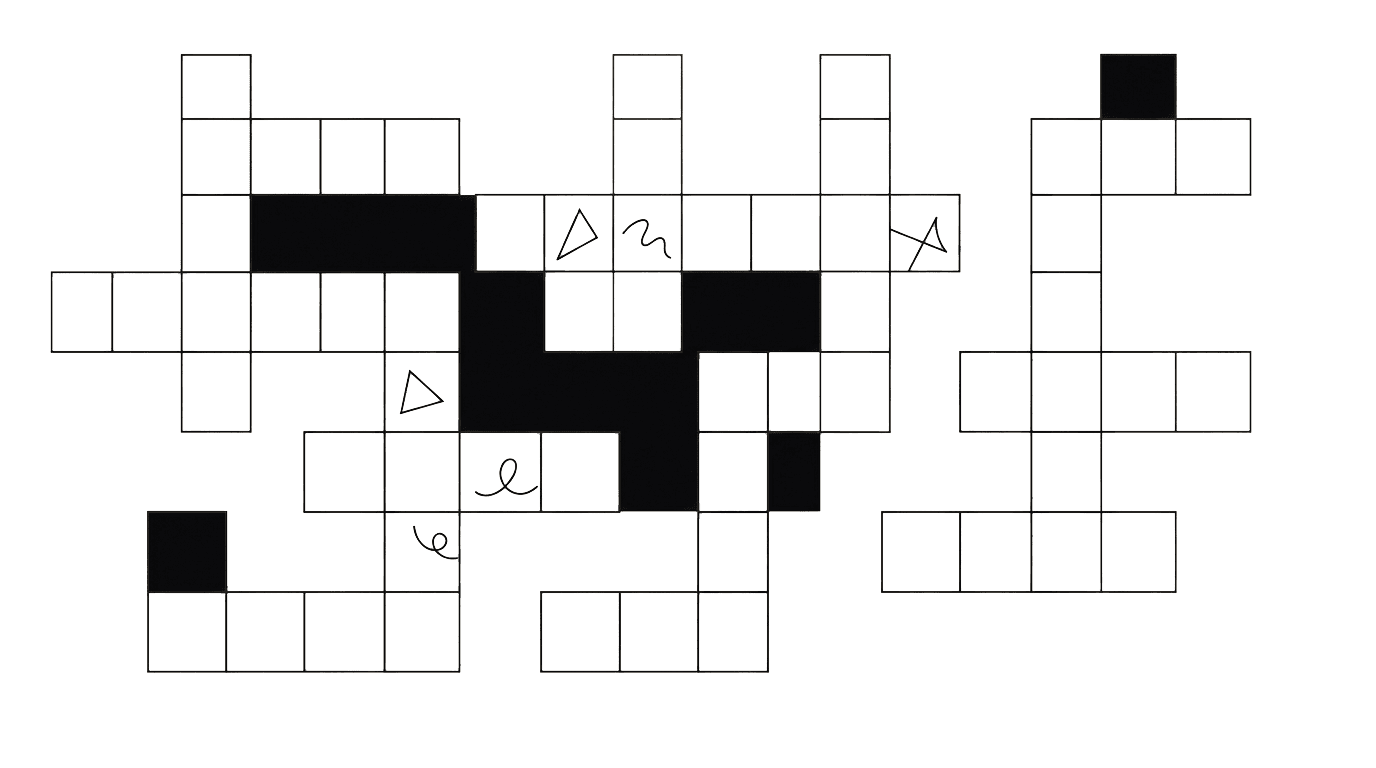
Category: Places & TravelDifficulty: Medium12 × 16
Saturday, November 21
Enter one letter per square. Answers run Across or Down. Omit spaces and accents; any special spelling convention is stated in the clue. This is a freeform themed grid, so some letters are not crossed.

About This Theme
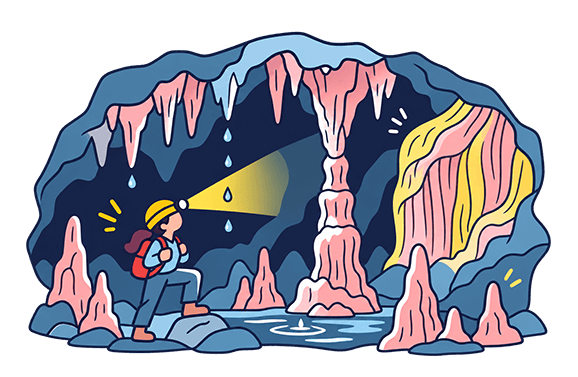
A cave is both a space to explore and a record of processes that continue far more slowly than a visitor's footsteps. Water can open passages by dissolving rock and later leave minerals behind as it moves through air-filled chambers. This puzzle concentrates on limestone-cave vocabulary and the shapes produced inside such spaces. Imagine where water arrives and how it moves: dripping from above, running down a wall, or disappearing underground. Those positions help distinguish formations whose names are easy to mix up when learned only as words. Speleothems - Caves and Karst (U.S. National Park Service)Lock — Stalactites, stalagmites, and columns; Speleothems (Cave Formations) - Great Basin National Park (U.S. National Park Service)Lock — Types of cave mineral formations

Clues
Across
- 1Landscape shaped by dissolution, often with caves and sinkholes (5)
- 4Formation created when a stalactite and stalagmite join (6)
- 6Sheet-like mineral deposit left by water moving over a cave surface (9)
- 10Mineral formation growing upward from a cave floor (10)
- 11General term for a mineral deposit formed inside a cave (10)
- 12Surface depression that can form through dissolution or collapse (8)
Down
- 2Rock or sediment body that can store and transmit groundwater (7)
- 3Curtain-like cave formation deposited along a sloping surface (7)
- 5Mineral formation hanging from a cave ceiling (10)
- 7Relatively large enclosed space within a cave system (7)
- 8Carbonate rock in which many solution caves develop (9)
- 9Calcium carbonate mineral common in limestone cave formations (7)
Answers and Explanations
After Your Solve
Cave formation and cave decoration are related but different processes. Dissolution can create openings, while mineral deposition can build features within them. A stalactite hangs from above, a stalagmite rises from below, and their meeting can form a column. Flowstone records water spreading across a surface rather than falling from a single point. These shapes are evidence of water's route, and their fragility is one reason cave visitors are asked to observe without touching or collecting them. Speleothems - Caves and Karst (U.S. National Park Service)Lock — Stalactites, stalagmites, and columns; Speleothems (Cave Formations) - Great Basin National Park (U.S. National Park Service)Lock — Types of cave mineral formations; Caves and Aquifers (U.S. National Park Service)Lock — Karst
- 1 acrossKARST
Karst describes a landscape and its drainage features rather than one cave. Water may travel underground in ways not obvious from the surface alone. Caves and Aquifers (U.S. National Park Service)Lock — Karst
- 4 acrossCOLUMN
A column connects ceiling and floor through accumulated mineral growth. It records the joining of two formations rather than a support deliberately installed by builders. Speleothems - Caves and Karst (U.S. National Park Service)Lock — Stalactites, stalagmites, and columns
- 6 acrossFLOWSTONE
Flowstone forms where water spreads or flows over rock. Its layered surfaces differ from the more localized growth associated with a steady dripping point. Speleothems (Cave Formations) - Great Basin National Park (U.S. National Park Service)Lock — Types of cave mineral formations
- 10 acrossSTALAGMITE
A stalagmite can grow where drips leave mineral deposits below. It does not have to match a stalactite directly above it in size or shape. Speleothems - Caves and Karst (U.S. National Park Service)Lock — Stalactites, stalagmites, and columns
- 11 acrossSPELEOTHEM
Speleothem covers formations such as stalactites and flowstone. It describes deposited cave minerals rather than every piece of rock found underground. Speleothems (Cave Formations) - Great Basin National Park (U.S. National Park Service)Lock — Types of cave mineral formations
- 12 acrossSINKHOLE
A sinkhole can develop where material is removed or support beneath the surface fails. Its presence may indicate processes below ground that are otherwise hidden. Caves and Aquifers (U.S. National Park Service)Lock — Sinkhole
- 2 downAQUIFER
An aquifer contains and transmits groundwater through connected openings. It is not necessarily a large underground lake or an open chamber large enough to enter. Caves and Aquifers (U.S. National Park Service)Lock — Aquifer
- 3 downDRAPERY
A drapery forms a thin hanging sheet as water follows a path along a surface. Its folded appearance gives rise to the comparison with fabric. Speleothems (Cave Formations) - Great Basin National Park (U.S. National Park Service)Lock — Drapery
- 5 downSTALACTITE
A stalactite grows downward from above as mineral-bearing water deposits material. The final letters help distinguish it from a stalagmite, which rises from the floor. Speleothems - Caves and Karst (U.S. National Park Service)Lock — Stalactites, stalagmites, and columns
- 7 downCHAMBER
A chamber is a space within the cave, not a mineral formation. Narrower passages may connect several chambers into a larger underground system. Merriam-Webster — Chamber
- 8 downLIMESTONE
Limestone can dissolve in weakly acidic water over time. This property helps explain why many caves form in it, though caves also occur in other materials. Caves and Aquifers (U.S. National Park Service)Lock — Limestone
- 9 downCALCITE
Calcite is a common mineral in speleothems. Naming the mineral is different from naming the formation's shape, so both calcite and stalactite can describe one object. Speleothems (Cave Formations) - Great Basin National Park (U.S. National Park Service)Lock — Types of cave mineral formations
Further Reading
- Speleothems - Caves and Karst (U.S. National Park Service)Lock — Stalactites, stalagmites, and columnsnps.gov
- Speleothems (Cave Formations) - Great Basin National Park (U.S. National Park Service)Lock — Types of cave mineral formationsnps.gov
- Caves and Aquifers (U.S. National Park Service)Lock — Karstnps.gov
About Eric Allred
Puzzle writing, factual review and editorial direction
Eric Allred started Triviosity after seeing how much his dad and his dad's partner enjoyed morning trivia on their iPad. A board-game fan since childhood, he brings several years of experience building a performance marketing agency to the solver experience. Eric is responsible for puzzle writing, factual review and editorial decisions, and reviews puzzles with AI assistance after they are created.
More about Eric AllredSuggest a correctionMore Puzzles
Places & Travel
EasyNational Parks Crossword
Play National Parks Crossword

Keep a little curiosity in your inbox
Join the Triviosity newsletter for puzzle links and new themes. You can unsubscribe at any time.