
Places & Travel
MediumCanal Journeys Crossword
Category: Places & TravelDifficulty: Medium13 × 13
Tuesday, November 3
Enter one letter per square. Answers run Across or Down. Omit spaces and accents; any special spelling convention is stated in the clue. This is a freeform themed grid, so some letters are not crossed.
About This Theme
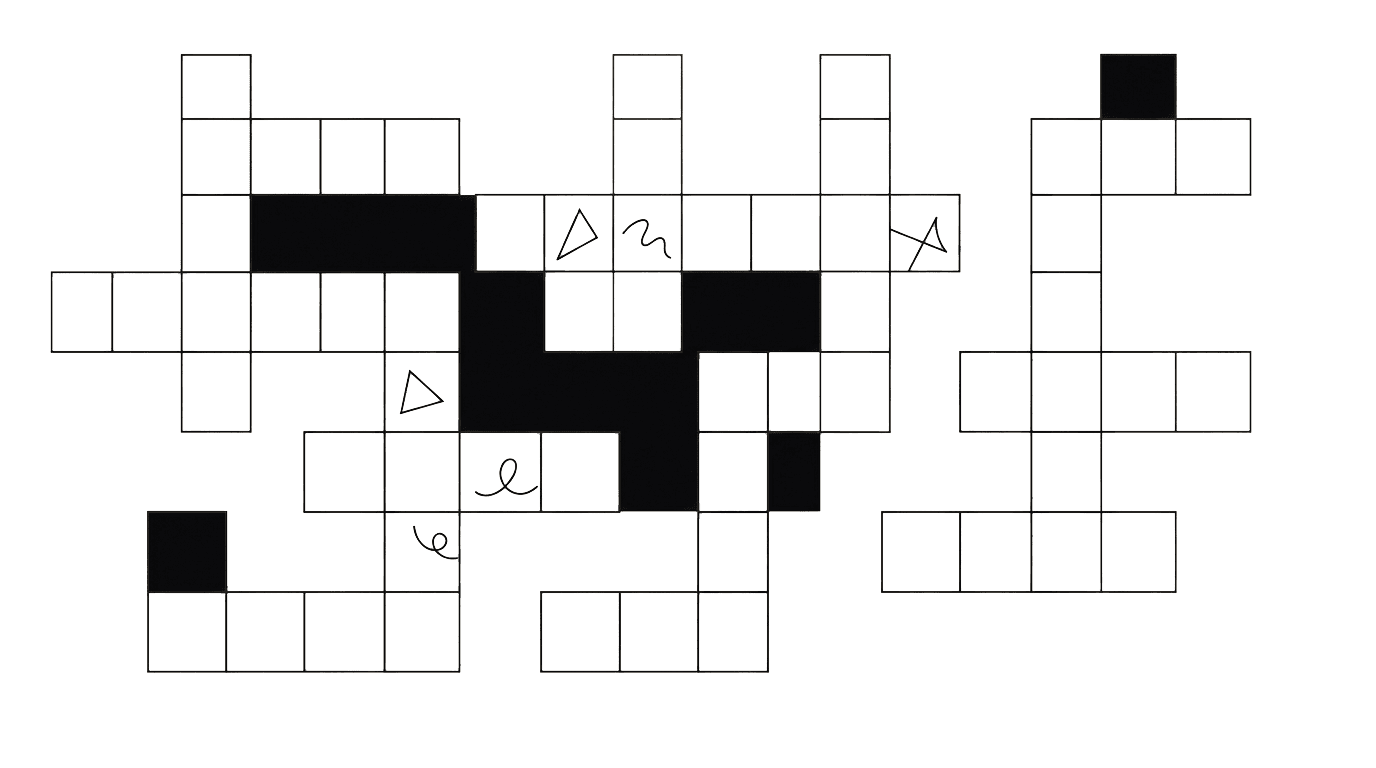
A canal journey moves through a landscape deliberately reshaped for water transport. The route may climb, cross a valley, or pass beneath a hill while keeping the boat afloat. This puzzle draws mainly on British canal vocabulary, where practical names describe the engineering and working life of the waterway. Think about the relationship between water levels and the structures around them. Some answers are features along the route, while others are objects a boater uses. A term familiar from an ordinary road or building may have a more specific waterside meaning. How does a canal lock work? | Canal & River Trust — Lock; Waterway jargon buster | planning and design | Canal & River Trust — Aqueduct
Clues
Across
- 2Slender vessel designed for Britain's narrow canals (10)
- 4Bridge that carries a canal over a valley or other obstacle (8)
- 8Barrier over which water flows to help regulate its level (4)
- 9Stout post to which a boat's rope can be secured (7)
- 11Water chamber that raises or lowers a boat between levels (4)
- 12Passage that carries a canal beneath a hill (6)
Down
- 1Movable barrier at an end of a lock chamber (4)
- 3Sliding valve controlling water flow at a canal lock (6)
- 5Path beside a canal once used by animals pulling boats (7)
- 6Hand tool used to turn the mechanism of many canal paddles (8)
- 7Place or arrangement used to secure a stationary boat (7)
- 10Level stretch of canal between locks (5)
Answers and Explanations
After Your Solve
A lock does not lift a boat mechanically; changing the water level in its chamber raises or lowers the floating vessel. That idea helps connect gates, paddles, and the level stretches between locks. Other structures solve different landscape problems: an aqueduct carries the waterway over an obstacle, while a tunnel takes it through one. The towpath recalls an earlier source of propulsion, when animals on the bank pulled boats carrying goods along the canal. How does a canal lock work? | Canal & River Trust — Lock; Waterway jargon buster | planning and design | Canal & River Trust — Aqueduct
- 2 acrossNARROWBOAT
A narrowboat's shape responds to restricted canal and lock dimensions. It is a particular vessel type, not simply a description for every boat that happens to look slim. PR_#7335_CRT_BoatersHandbook2021_am1_160721_v2.indd — Narrowboat dimensions and locks
- 4 acrossAQUEDUCT
An aqueduct carries water across a gap. For a navigable canal, the supported channel must accommodate boats as well as the water beneath them. Waterway jargon buster | planning and design | Canal & River Trust — Aqueduct
- 8 acrossWEIR
A weir allows water to pass over its top. It differs from a lock, whose chamber is designed to pass boats between different levels. Waterway jargon buster | planning and design | Canal & River Trust — Weir
- 9 acrossBOLLARD
A bollard offers a strong attachment point at the waterside. Its purpose is to secure a line, not to propel the boat or change the canal's level. PR_#7335_CRT_BoatersHandbook2021_am1_160721_v2.indd — Bollard
- 11 acrossLOCK
A lock changes the water level around a floating boat. Its gates remain closed during that change, allowing the chamber to connect stretches at different heights. How does a canal lock work? | Canal & River Trust — Lock
- 12 acrossTUNNEL
A canal tunnel lets a waterway pass through higher ground. It solves a different problem from a lock, which changes the boat's elevation between water levels. Merriam-Webster — Tunnel
- 1 downGATE
Lock gates contain or release the chamber's water once levels permit passage. Their function differs from that of the smaller valves used while filling or emptying. How does a canal lock work? | Canal & River Trust — Gate
- 3 downPADDLE
A lock paddle opens a route for water to enter or leave the chamber. It is not the handheld blade used to propel a canoe. How does a canal lock work? | Canal & River Trust — Paddle
- 5 downTOWPATH
Towpaths supported the towing of boats from the bank. Many now serve walkers and cyclists, preserving a route created for the canal's working traffic. Waterway jargon buster | planning and design | Canal & River Trust — Towpath
- 6 downWINDLASS
A windlass provides leverage for operating a paddle mechanism. Here it is the removable handle used by boaters, rather than a large powered winch. PR_#7335_CRT_BoatersHandbook2021_am1_160721_v2.indd — Windlass
- 7 downMOORING
A mooring holds a boat in position when it is not underway. The word can describe both the location and the means of securing the vessel. Merriam-Webster — Mooring
- 10 downPOUND
A pound is a length of canal with a controlled water level. In this context the word is unrelated to a unit of weight or a place that holds stray animals. Waterway jargon buster | planning and design | Canal & River Trust — Pound
Further Reading
- How does a canal lock work? | Canal & River Trust — Lockcanalrivertrust.org.uk
- Waterway jargon buster | planning and design | Canal & River Trust — Aqueductcanalrivertrust.org.uk
About Eric Allred
Puzzle writing, factual review and editorial direction
Eric Allred started Triviosity after seeing how much his dad and his dad's partner enjoyed morning trivia on their iPad. A board-game fan since childhood, he brings several years of experience building a performance marketing agency to the solver experience. Eric is responsible for puzzle writing, factual review and editorial decisions, and reviews puzzles with AI assistance after they are created.
More about Eric AllredSuggest a correctionMore Puzzles
Places & Travel
EasyNational Parks Crossword
Play National Parks Crossword
Keep a little curiosity in your inbox
Join the Triviosity newsletter for puzzle links and new themes. You can unsubscribe at any time.