
Music & Performance
MediumMusical Instruments Crossword
Category: Music & PerformanceDifficulty: Hard14 × 12
Tuesday, September 29
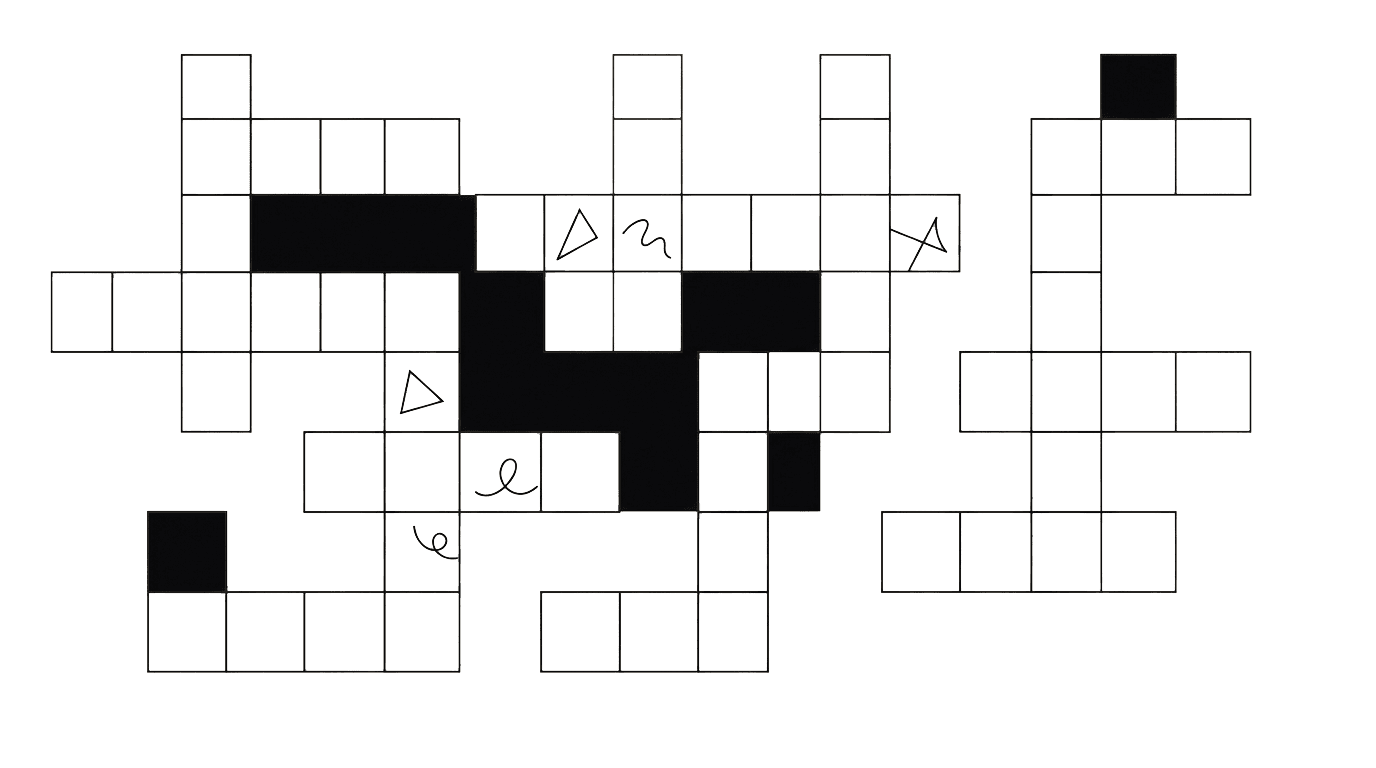
Enter one letter per square. Answers run Across or Down. Omit spaces and accents; any special spelling convention is stated in the clue. This is a freeform themed grid, so some letters are not crossed.

About This Theme
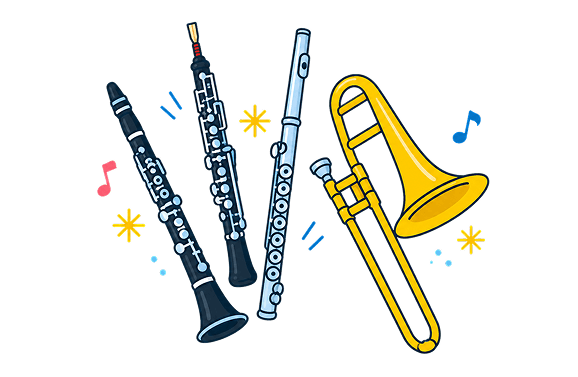
An instrument's sound begins with a physical action: a string vibrates, air moves, or a surface is struck. This puzzle asks you to recognize instruments from those mechanisms and a few distinctive features. The answers include members of several orchestral families, plus a familiar keyboard relative. Some clues deliberately point to the way sound is produced rather than the material visible on the outside. That can help with an instrument whose name you almost remember.
Clues
Across
- 3Large, low-pitched brass instrument with valves (4)
- 5Keyboard instrument whose strings are plucked (11)
- 7Keyboard instrument whose strings are struck by hammers (5)
- 8Low-pitched orchestral double-reed woodwind (7)
- 9Woodwind sounded by blowing across an opening rather than through a reed (5)
- 10Bowed string instrument usually played seated with an endpin on the floor (5)
Down
- 1Instrument with strings stretched within a roughly triangular frame (4)
- 2Woodwind using a single reed and a largely cylindrical bore (8)
- 3Brass instrument whose pitch is commonly changed with a slide (8)
- 4Orchestral kettledrums that can be tuned to specific pitches (7)
- 6Bowed string instrument pitched between violin and cello (5)
- 11Orchestral double-reed instrument that commonly gives the tuning note (4)
Answers and Explanations
After Your Solve
The family names can be misleading if you read them only as material labels. A modern FLUTE is often metal but belongs to the woodwinds. The HARPSICHORD and PIANO both use keyboards, yet their strings are activated differently. OBOE and BASSOON share a double-reed mechanism while occupying different ranges. Those comparisons explain why a mechanism-based clue is fairer than a vague description of tone. Revisit any answer you found through crossings and connect its name to the action that starts the sound.
- 3 acrossTUBA
The tuba supplies a low brass voice.
- 5 acrossHARPSICHORD
The mechanism distinguishes it from a piano.
- 7 acrossPIANO
Hammers set the piano strings vibrating.
- 8 acrossBASSOON
Its double reed links it mechanically with the oboe.
- 9 acrossFLUTE
A flute does not require a reed.
- 10 acrossCELLO
The endpin supports the cello.
- 1 downHARP
A harp's strings are usually plucked.
- 2 downCLARINET
A single reed vibrates against the mouthpiece.
- 3 downTROMBONE
The slide changes the effective tube length.
- 4 downTIMPANI
Timpani have adjustable pitches.
- 6 downVIOLA
The viola occupies a middle range in the string family.
- 11 downOBOE
The oboe uses two reed blades vibrating together.
Further Reading
- Theme referencemerriam-webster.com
About Eric Allred
Puzzle writing, factual review and editorial direction
Eric Allred started Triviosity after seeing how much his dad and his dad's partner enjoyed morning trivia on their iPad. A board-game fan since childhood, he brings several years of experience building a performance marketing agency to the solver experience. Eric is responsible for puzzle writing, factual review and editorial decisions, and reviews puzzles with AI assistance after they are created.
More about Eric AllredSuggest a correctionMore Puzzles
Music & Performance
MediumOn the Dance Floor Crossword
Play On the Dance Floor CrosswordMusic & Performance
MediumPercussion Patterns Crossword
Play Percussion Patterns Crossword
Keep a little curiosity in your inbox
Join the Triviosity newsletter for puzzle links and new themes. You can unsubscribe at any time.