
Music & Performance
HardReading the Score Crossword
Category: Music & PerformanceDifficulty: Medium10 × 11
Monday, November 16
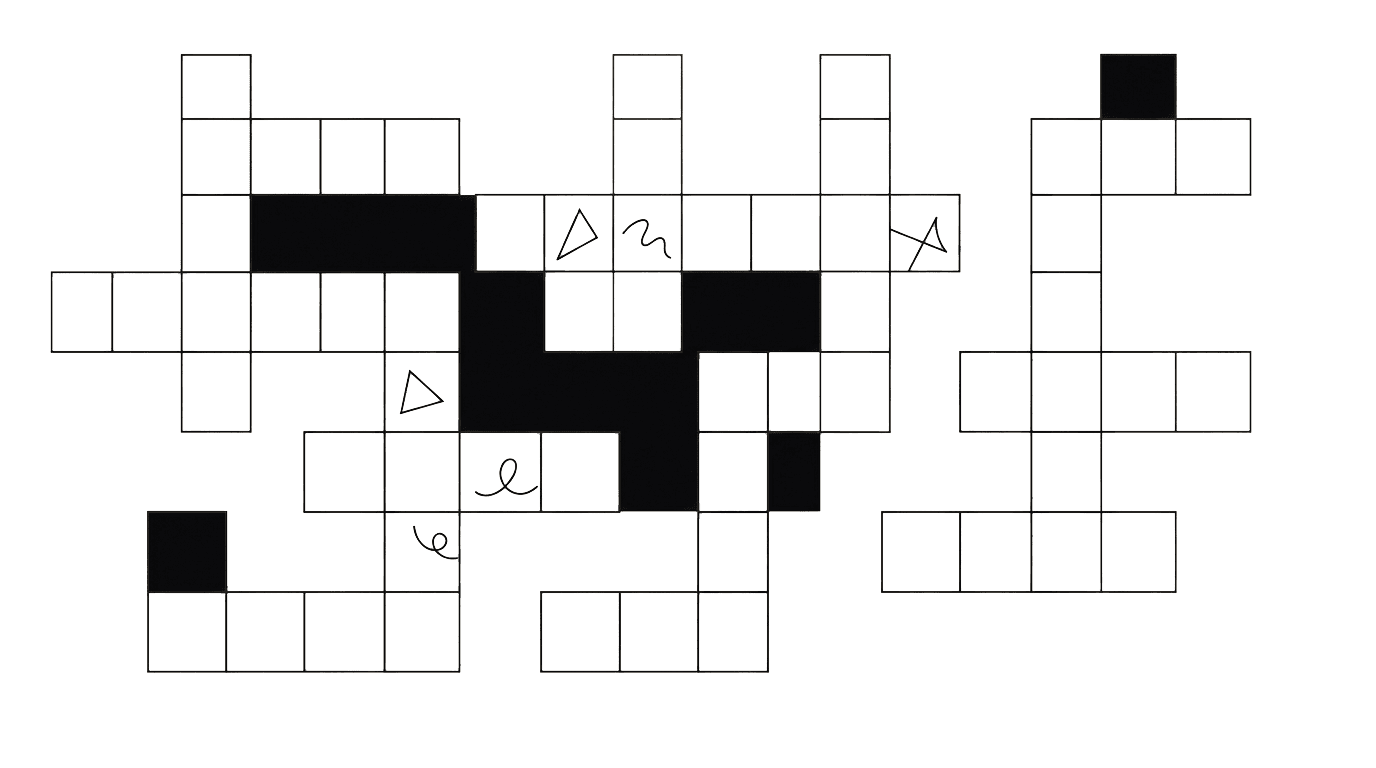
Enter one letter per square. Answers run Across or Down. Omit spaces and accents; any special spelling convention is stated in the clue. This is a freeform themed grid, so some letters are not crossed.
About This Theme
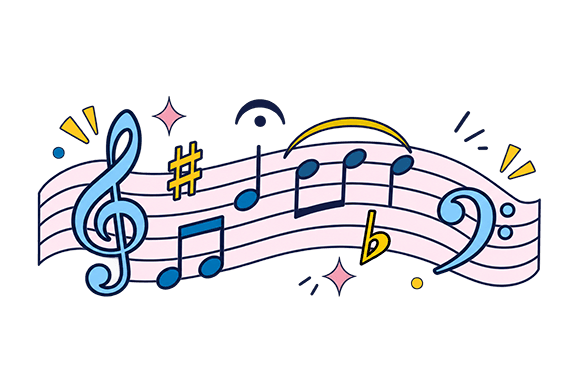
Musical notation turns several kinds of information into a compact visual language. A symbol's height may indicate pitch, its shape may indicate duration, and a separate marking may describe how a phrase should feel or change. This puzzle explores common staff-notation terms without asking you to read a melody from an image. Keep those functions separate as you solve. Two curved marks can look similar but give different instructions, while a small sign beside a note can change its pitch without altering the length of time it lasts. Introduction to music theory 2: pitch and notation: Glossary | OpenLearn - Open University — Clef; Merriam-Webster — Tie
Clues
Across
- 1Symbol that establishes pitch references on a staff (4)
- 3Curved mark grouping notes into a connected phrase or gesture (4)
- 4Sign indicating that a note or rest is held beyond its usual duration (7)
- 5Notation symbol indicating a measured silence (4)
- 9Sign that cancels an applicable sharp or flat (7)
- 10Common name of the F clef used for many lower parts (4)
Down
- 1Instruction to become gradually louder (9)
- 2Sign that lowers a natural note by a semitone (4)
- 3Sign that raises a natural note by a semitone (5)
- 6Curved mark joining durations of notes at the same pitch (3)
- 7Set of five horizontal lines used for standard musical notation (5)
- 8Common name of the G clef used for many higher parts (6)
Answers and Explanations
After Your Solve
Notation is a system of relationships. The staff gives positions, the clef helps assign pitches to them, and accidentals modify those pitches. Rhythm and expression add different layers. A tie combines durations of the same pitch, while a slur groups notes into a phrase or connected gesture. Recognizing that distinction prevents a common visual confusion. The written score is detailed, but it still relies on performers to interpret timing, articulation, and musical context. Introduction to music theory 2: pitch and notation: Glossary | OpenLearn - Open University — Clef; Merriam-Webster — Tie; Merriam-Webster — Slur
- 1 acrossCLEF
A clef assigns a reference pitch to a line or position. Different clefs let instruments and voices use a readable range without excessive extra lines. Introduction to music theory 2: pitch and notation: Glossary | OpenLearn - Open University — Clef
- 3 acrossSLUR
A slur groups notes and often indicates connected performance. Unlike a tie, it can extend across different pitches rather than merging repeated notes into one duration. Merriam-Webster — Slur
- 4 acrossFERMATA
A fermata gives a performer or conductor discretion over extra time. It does not prescribe one fixed number of additional beats in every context. Merriam-Webster — Fermata
- 5 acrossREST
A rest occupies time without a played note in that part. Silence is therefore written as part of the rhythm rather than treated as an absence of musical information. Merriam-Webster — Rest
- 9 acrossNATURAL
A natural restores the unaltered form of a note name in context. It does not mean the note is louder, longer, or played with a different instrument. Introduction to music theory 2: pitch and notation: Glossary | OpenLearn - Open University — Natural
- 10 acrossBASS
The bass clef identifies the F below middle C. Together with treble clef it forms the familiar paired staff arrangement often used for piano music. Introduction to music theory 2: pitch and notation: Glossary | OpenLearn - Open University — Bass
- 1 downCRESCENDO
A crescendo describes change over time rather than a single loudness level. Its effect depends on the starting dynamic and the musical phrase it shapes. An introduction to music theory: 8.1 A selected list of performance directions | OpenLearn - Open… — Crescendo
- 2 downFLAT
A flat lowers a note by a semitone, or half step. It is an instruction about pitch, rather than a direction to play more softly or briefly. Merriam-Webster — Flat
- 3 downSHARP
A sharp raises a note by a semitone, or half step. It changes pitch rather than duration, so it serves a different function from the note’s rhythmic shape. Merriam-Webster — Sharp
- 6 downTIE
A tie combines the durations into one sustained sound. Its same-pitch requirement distinguishes it from a slur joining a sequence of different pitches. Merriam-Webster — Tie
- 7 downSTAFF
The staff provides lines and spaces on which notes are placed. Their pitch meaning depends on a clef, so height alone is not the entire reading system. Introduction to music theory 2: pitch and notation: Glossary | OpenLearn - Open University — Staff
- 8 downTREBLE
The treble clef identifies the G above middle C on its reference line. It is commonly used for higher ranges, but it does not belong exclusively to one instrument. Introduction to music theory 2: pitch and notation: Glossary | OpenLearn - Open University — Treble
Further Reading
- Introduction to music theory 2: pitch and notation: Glossary | OpenLearn - Open University — Clefopen.edu
- Merriam-Webster — Tiemerriam-webster.com
- Merriam-Webster — Slurmerriam-webster.com
About Eric Allred
Puzzle writing, factual review and editorial direction
Eric Allred started Triviosity after seeing how much his dad and his dad's partner enjoyed morning trivia on their iPad. A board-game fan since childhood, he brings several years of experience building a performance marketing agency to the solver experience. Eric is responsible for puzzle writing, factual review and editorial decisions, and reviews puzzles with AI assistance after they are created.
More about Eric AllredSuggest a correctionMore Puzzles
Music & Performance
EasyOrchestra Crossword: Orchestra Vocabulary
Play Orchestra Crossword: Orchestra Vocabulary
Keep a little curiosity in your inbox
Join the Triviosity newsletter for puzzle links and new themes. You can unsubscribe at any time.