
Music & Performance
HardThe Recording Studio Crossword
Category: Music & PerformanceDifficulty: Medium12 × 12
Thursday, October 29

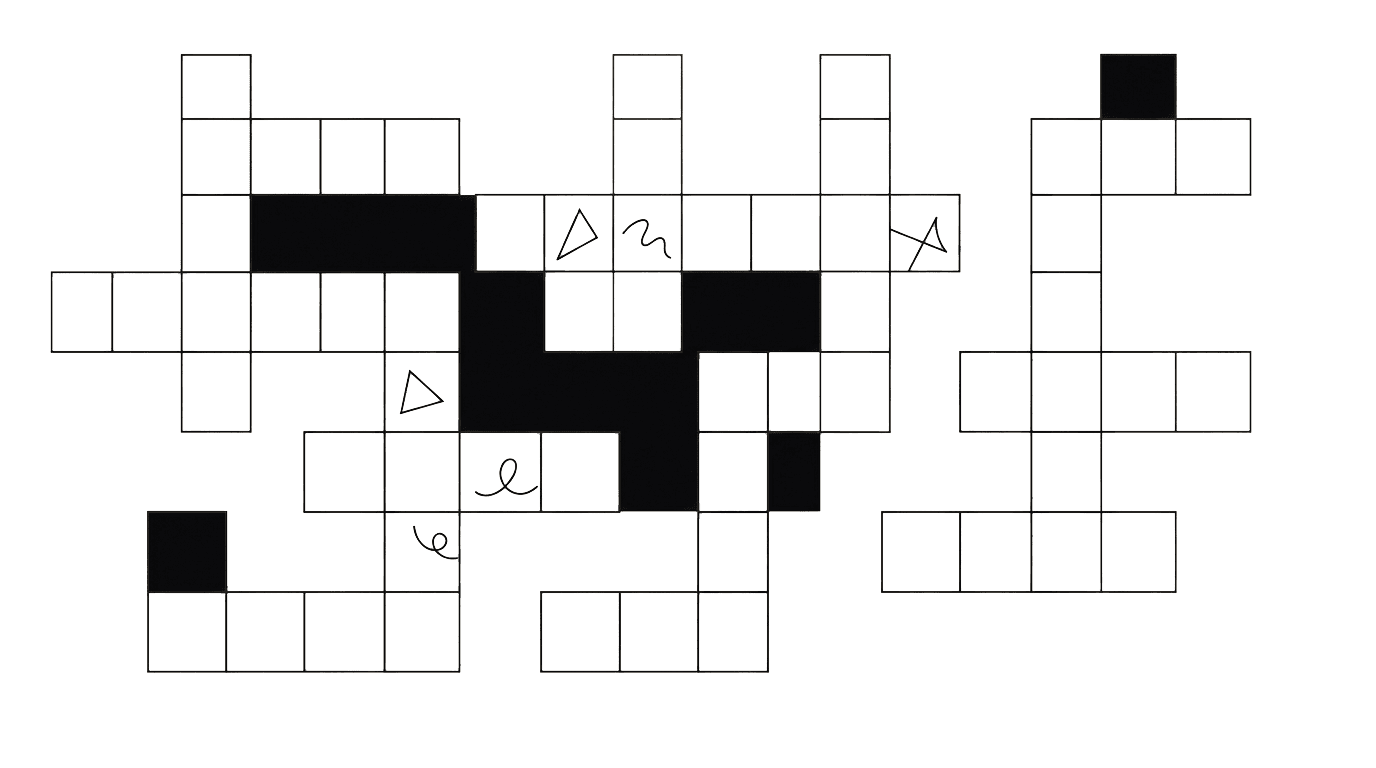
Enter one letter per square. Answers run Across or Down. Omit spaces and accents; any special spelling convention is stated in the clue. This is a freeform themed grid, so some letters are not crossed.

About This Theme
A recording captures a performance, but the finished sound also reflects dozens of decisions about placement, levels, and balance. This puzzle follows an audio signal from its first capture to a combination of recorded parts. You do not need to know a particular software package. Concentrate on what each tool or action does: converting, measuring, isolating, repeating, or blending. Everyday words such as track and take acquire specific meanings in the studio, where a session may preserve several attempts before anyone decides what belongs in the final version. Shure — Six keys to better audio: monitoring; Comping — Take
Clues
Across
- 2Recording added while previously recorded parts play back (7)
- 5Device that converts sound into an electrical audio signal (10)
- 7Studio loudspeaker used to judge a recording (7)
- 9Amount of amplification applied to a signal (4)
- 10Sliding control used to adjust a channel's level (5)
- 11One recorded attempt at a performance (4)
Down
- 1Paired ear-worn speakers used for private monitoring (10)
- 3Distortion caused when a signal exceeds a system's level limit (8)
- 4Effect that simulates lingering sound reflections in a space (6)
- 6Control that places a sound toward the left or right of a stereo mix (3)
- 7Device or software section that combines audio channels (5)
- 8Separate recorded part or channel in a multitrack session (5)
Answers and Explanations
After Your Solve
Capturing and shaping sound are related but separate tasks. A microphone's placement changes what reaches the system, while processing changes a signal that has already been captured. Likewise, a new take replaces an attempt, whereas an overdub adds another recorded layer. These distinctions help explain why a finished recording need not reproduce one uninterrupted performance. The creative result depends both on the musicians and on decisions about what is kept, combined, emphasized, or left out. Shure — Six keys to better audio: monitoring; Comping — Take; Merriam-Webster — Overdub
- 2 acrossOVERDUB
An overdub adds another layer to an existing recording. It allows one performer to contribute several parts that could not all be played simultaneously by that person. Merriam-Webster — Overdub
- 5 acrossMICROPHONE
A microphone begins the recording chain by responding to sound. It does not merely make sound louder; amplification happens elsewhere in the equipment chain. Shure — Introduction to Recording and Sound Reinforcement — PDF page 5
- 7 acrossMONITOR
A studio monitor helps engineers hear the material they are recording or mixing. Here the word means a listening tool, not the computer screen beside the controls. Shure — Six keys to better audio: monitoring
- 9 acrossGAIN
Gain describes amplification rather than a particular loudness heard by a listener. Adjusting an input's gain affects the signal before later balance changes in the mix. Shure — Introduction to Recording and Sound Reinforcement — PDF page 17
- 10 acrossFADER
A fader changes a signal's level within a mix. Its long sliding movement makes gradual adjustments easier to follow than a simple on-off switch would. Shure — Introduction to Recording and Sound Reinforcement — PDF page 18
- 11 acrossTAKE
A take is a particular attempt, which may be kept, discarded, or combined with others. The term describes the performance pass rather than an individual instrument channel. Comping — Take
- 1 downHEADPHONES
Headphones let performers hear a backing track without sending it freely into the room. That can reduce unwanted pickup by a nearby recording microphone. Shure — Six keys to better audio: monitoring
- 3 downCLIPPING
Clipping occurs when peaks cannot be represented or passed cleanly. Lowering the playback volume afterward does not automatically restore the missing shape of those peaks. FAQ:Recording - Troubleshooting - Audacity Manual — Why do recordings distort when loud?
- 4 downREVERB
Reverb creates a sense of acoustic space through many closely spaced reflections. It differs from a clearly separated echo that the ear recognizes as a repeat. Microphone Techniques for Live Sound Reinforcement (English) — Reflection, echo, and reverberation
- 6 downPAN
Panning changes a signal's position between stereo channels. It affects apparent placement rather than the pitch of the note or the speed of the performance. Shure — Introduction to Recording and Sound Reinforcement — PDF page 18
- 7 downMIXER
A mixer brings separate signals together and allows their relative levels to change. This lets a voice remain audible while accompanying instruments retain their own space. Shure — Introduction to Recording and Sound Reinforcement — PDF page 17
- 8 downTRACK
A track can hold a voice or instrument separately from other parts. This separation allows later editing and balancing without changing every sound at once. Shure — Introduction to Recording and Sound Reinforcement — PDF page 31
Further Reading
- Shure — Six keys to better audio: monitoringshure.com
- Comping — Takeableton.com
- Merriam-Webster — Overdubmerriam-webster.com
About Eric Allred
Puzzle writing, factual review and editorial direction
Eric Allred started Triviosity after seeing how much his dad and his dad's partner enjoyed morning trivia on their iPad. A board-game fan since childhood, he brings several years of experience building a performance marketing agency to the solver experience. Eric is responsible for puzzle writing, factual review and editorial decisions, and reviews puzzles with AI assistance after they are created.
More about Eric AllredSuggest a correctionMore Puzzles
Music & Performance
EasyOrchestra Crossword: Orchestra Vocabulary
Play Orchestra Crossword: Orchestra Vocabulary

Keep a little curiosity in your inbox
Join the Triviosity newsletter for puzzle links and new themes. You can unsubscribe at any time.